Paver Patio Installation for Sloped Yards in Newton, NC
A paver patio installation can turn a sloped Newton backyard into a level, comfortable outdoor living space. The key is preparing the site correctly with grading, drainage, a compacted base, and a retaining wall when the slope requires one.
At Pro Series Lawn Care, we help homeowners in Newton, Conover, Hickory, and surrounding Catawba County communities turn difficult terrain into patios they can actually use. Here is what you should know before building on a sloped yard.
Why Sloped Newton Yards Need Extra Preparation
A patio on a slope needs more preparation than one built on flat ground. Pavers must sit on a stable, level foundation that controls water and prevents the downhill edge from moving.
Properties around Newton and the North Carolina Piedmont often have rolling grades and clay-rich subsoil. The USDA describes Cecil-series soils as common on Piedmont uplands and side slopes, with clay or clay-loam subsoil and medium surface runoff. Soil conditions still vary by property, so your contractor should inspect the site before choosing the excavation depth, base materials, and drainage plan.
Without proper preparation, you may eventually notice:
- Low or sunken pavers
- Separating joints
- Loose patio edges
- Standing water
- Soil erosion
- Movement near steps or retaining walls
A patio may look good immediately after installation, but the quality of the foundation determines how well it performs over time.
What Happens Before the First Paver Goes Down
The most important work happens before the pavers are installed.
Your contractor must create a level building area, prepare a stable base, and determine where rainwater will flow.
| Preparation Step | Why It Matters |
|---|---|
| Site assessment | Identifies slopes, drainage patterns, access, and elevation changes |
| Clearing and excavation | Removes grass, roots, topsoil, and unsuitable material |
| Cut-and-fill grading | Creates a level patio platform |
| Base installation | Supports the patio and helps manage moisture |
| Compaction | Reduces future settling and uneven areas |
| Edge support | Keeps the base and pavers from spreading downhill |
| Drainage planning | Moves water away from the house, wall, and patio |
Sloped projects often require professional grading and land clearing before the patio foundation can be installed. The crew may cut into the uphill side, add compacted fill along the downhill side, or use a combination of both methods.
When large amounts of soil, gravel, roots, or debris must be moved, skid steer work can make the preparation process more precise and efficient.
Industry paver construction guidelines from the Concrete Masonry and Hardscapes Association emphasize proper subgrade preparation, compacted aggregate, a consistent bedding layer, secure edge restraints, and positive drainage. The exact base depth and materials should match the soil conditions, paver type, patio size, and expected use.
How Grading and Drainage Protect the Patio
Proper grading keeps water from collecting on the patio or flowing toward your home. Even a strong patio base can develop problems when runoff has nowhere safe to go.
The finished patio should have a slight, controlled slope that directs water away from the foundation. The surrounding yard may also need to be reshaped so water does not wash soil onto the patio or collect behind a retaining wall.
Depending on the property, the drainage plan may include:
- Surface grading
- Drainage stone
- Wall drainage
- Catch basins
- Channel drains
- Underground drainage pipe
- A controlled lawn or landscape outlet
Your contractor should evaluate where water enters the project area, where it travels during heavy rain, and where it can leave without causing erosion or affecting a neighboring property.
How Retaining Walls and Paver Patios Work Together
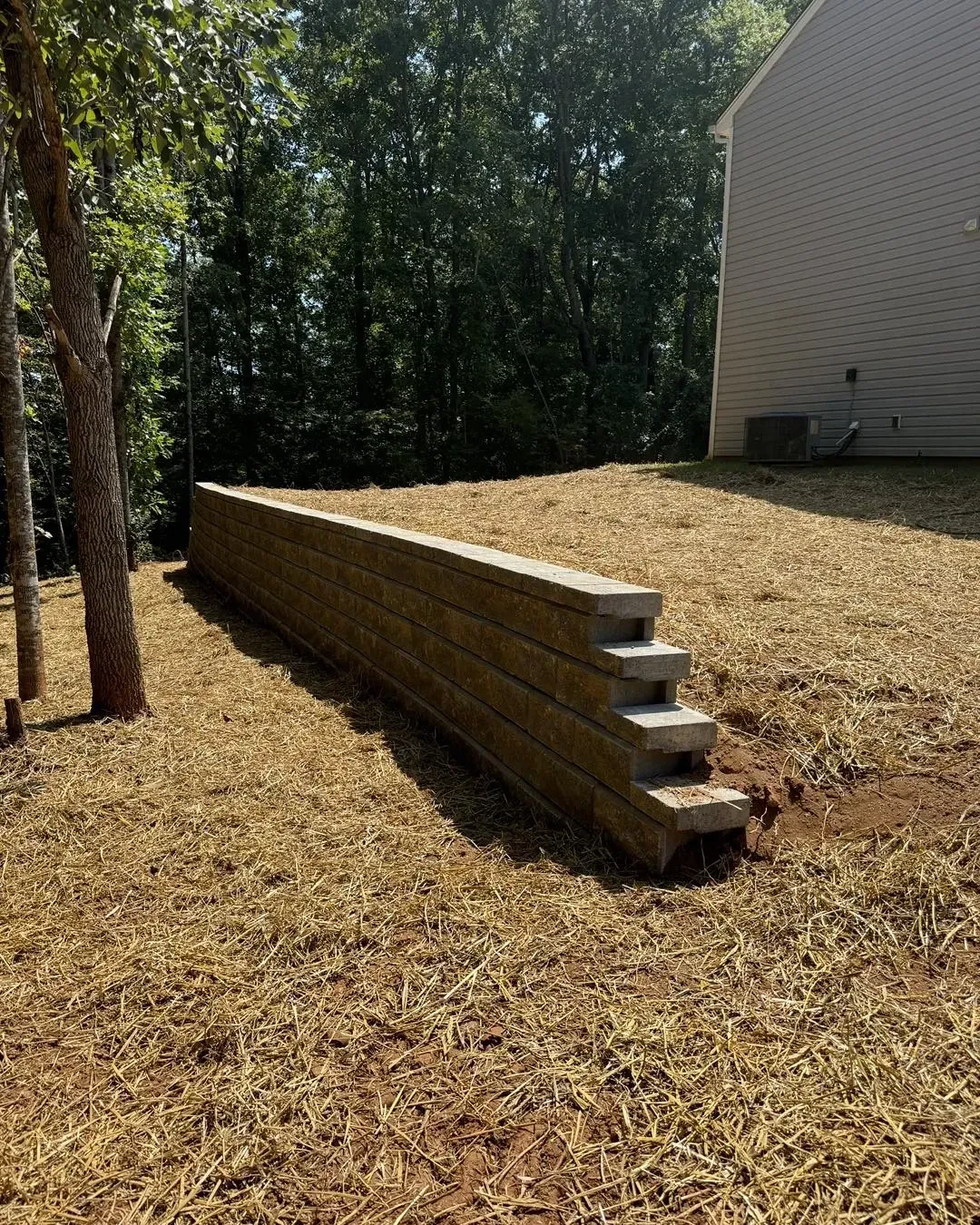
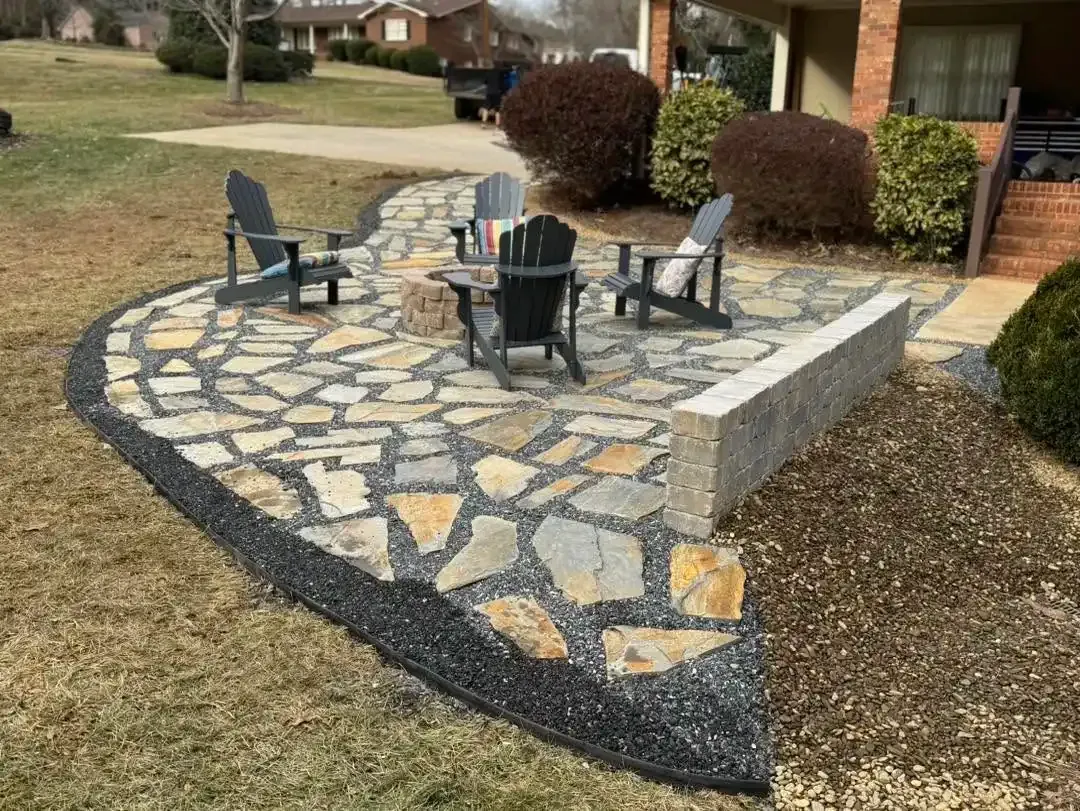
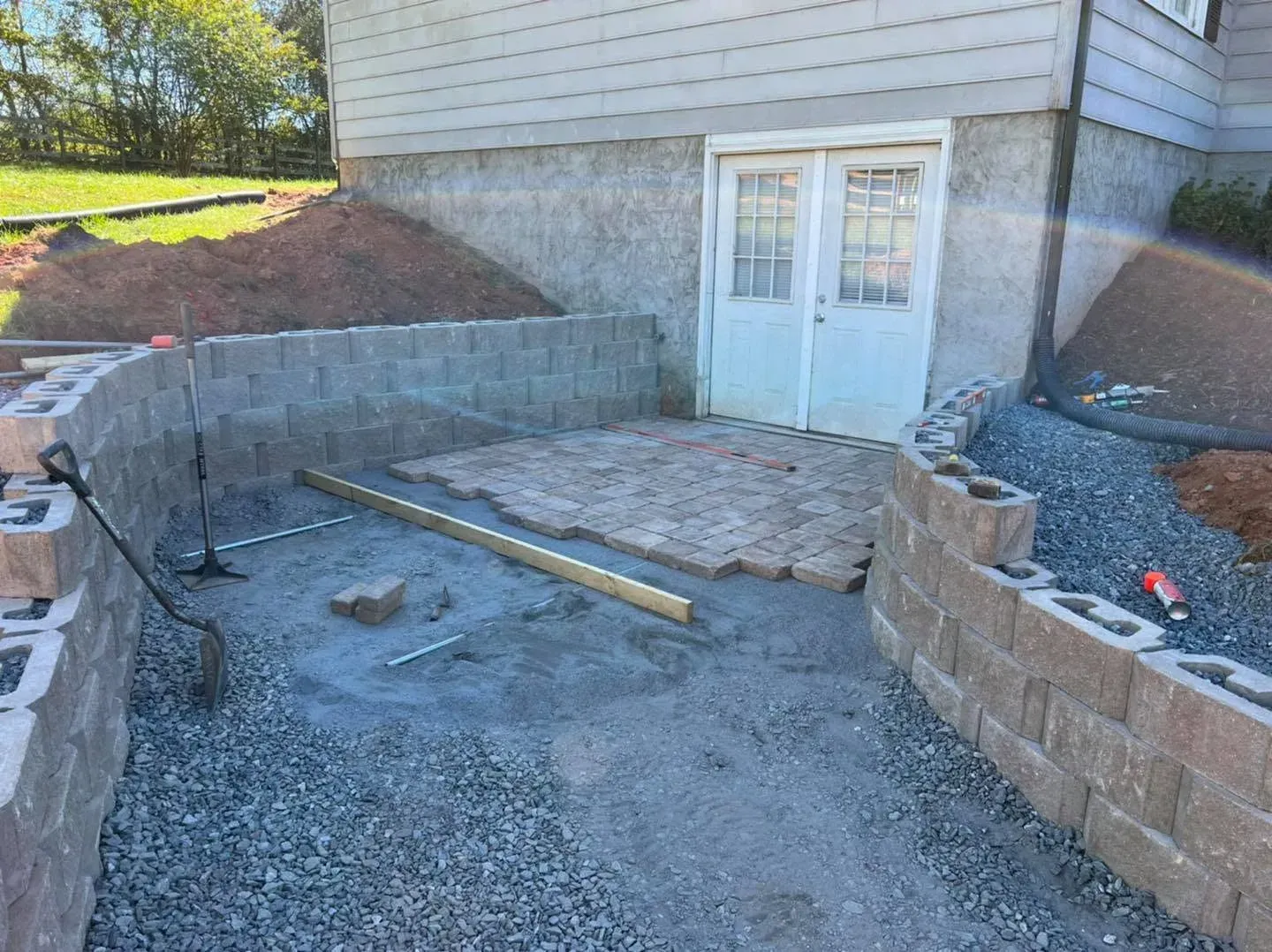
A retaining wall supports soil or compacted fill so the patio can remain level. On many sloped yards, the patio and wall should be designed as one coordinated system.
A wall may hold back the uphill side of the yard, support the downhill patio edge, or create several usable terraces. It can also provide built-in seating, planting areas, steps, or separation between outdoor living zones.
Professional retaining wall installation should account for:
- Wall height
- Soil conditions
- Water pressure
- Drainage behind the wall
- The weight of the patio and nearby features
- Distance from the home or property line
Larger walls, significant grade changes, or projects near property lines may require engineering or local approval, so confirm the requirements before construction begins.
A wall should not be added automatically to every sloped patio. A mild grade may only need careful excavation and secure edge restraints. Steeper slopes or patios supported by substantial fill are more likely to require a structural wall.
Patio Designs That Work Well on Sloped Yards
The right design
depends on the steepness of your yard and how you want to use the finished area. A thoughtful layout can turn previously wasted terrain into separate spaces for dining, cooking, relaxing, and entertaining.
| Yard Condition | Practical Design Option |
|---|---|
| Mild slope | Single-level patio with secure edge restraints |
| Moderate slope | Patio supported by a downhill retaining wall |
| Steep slope | Tiered patio with steps between levels |
| Narrow yard | Compact patio with built-in seating |
| Large elevation change | Multiple terraces with separate activity zones |
| Runoff near the house | Regraded patio with a controlled drainage system |
A tiered design can create a dining area near the house and a lower fire pit or lounge area farther into the yard. Built-in seating along a retaining wall can also save space and reduce the need for extra furniture.
Outdoor seating is one of the most common priorities in current patio projects. The 2026 U.S. Houzz Outdoor Trends Study reports that 83% of renovated outdoor spaces include a lounge or seating area. That makes it worth planning furniture zones, walking paths, and wall placement before construction begins.
For additional design ideas, see how you can transform your outdoor space with paver patio installation.
Choosing Pavers for a Newton, NC Patio
Choose pavers based on traction, durability, maintenance, and how well they complement your home. Concrete pavers, brick pavers, and natural stone can all perform well when the foundation is properly designed.
Consider these features:
- Surface Texture: Textured surfaces provide better traction when wet.
- Color: Blended mid-tone colors can hide pollen, dust, and minor stains.
- Paver Size: Larger units require a particularly level and stable base.
- Joint Design: Proper joints help lock the surface together.
- Edge Details: Strong edge restraints help prevent spreading.
- Drainage Needs: Permeable systems may help manage runoff but require a specially designed base.
The patio color should coordinate with your siding, brick, roof, and retaining wall. You do not need to match every surface exactly. A complementary mix of tan, brown, muted red, or warm gray often creates a more natural appearance.
The Paver Patio Installation Process
A sloped-yard installation follows a clear sequence so each stage supports the next. The exact process may vary based on the slope, access, soil, drainage needs, and retaining-wall design.
- Assess the property. Measure grade changes, check equipment access, and identify drainage patterns.
- Create the layout. Plan the patio size, elevation, pattern, steps, walls, and activity zones.
- Clear and excavate. Remove vegetation, roots, topsoil, and weak material.
- Grade the site. Cut into the slope or add compacted fill to create a level platform.
- Install drainage. Add wall drainage, surface drains, or piping where needed.
- Build retaining walls. Complete structural walls before installing the patio surface.
- Prepare the base. Place and compact the required aggregate in controlled layers.
- Install the pavers. Add the bedding layer, place the pattern, and cut clean edges.
- Secure the surface. Install edge restraints, fill the joints, and compact the pavers.
- Finish the surrounding grade. Direct water away from the patio and home.
- Complete the walkthrough. Review maintenance, drainage outlets, and finished details.
A professionally planned paver patio installation should address the complete site, not just the visible paver surface.
How Long Does Installation Take?
The installation timeline depends on the patio size, slope, retaining-wall requirements, equipment access, and weather. A simple project may take several working days, while a steep or tiered patio can require additional time.
Rain and saturated soil can delay excavation and compaction. It is better to adjust the schedule than to rush foundation work when the ground is too wet.
Your contractor should provide a project-specific timeline after evaluating the property and finalizing the design.
How to Maintain a Paver Patio
A properly installed paver patio is relatively easy to maintain. Regular cleaning and early attention to small issues can help protect the surface and surrounding walls.
Use this maintenance checklist:
- Sweep away leaves, soil, and organic debris.
- Clean spills before they become permanent stains.
- Keep wall drains and drainage outlets clear.
- Replace missing joint material when necessary.
- Check patio edges for spreading or movement.
- Watch for settling near steps and retaining walls.
- Avoid aggressive pressure washing that removes joint sand.
- Keep a few extra matching pavers for future repairs.
Individual pavers can often be removed and replaced without rebuilding the entire patio, which makes repairs easier than with one large concrete slab.
FAQs About Paver Patios
Do I need a retaining wall if my yard has a slight slope?
Not always. A mild slope may only require excavation, grading, a compacted base, and secure edge restraints. A wall becomes more likely when the patio requires substantial fill or additional support along the downhill side.
Will a paver patio work over clay-rich soil?
Yes, when the soil and base are properly prepared. Depending on the property, the crew may need deeper excavation, additional aggregate, separation fabric, or drainage improvements.
Can the patio drain toward my lawn?
Yes, when the lawn provides a safe drainage outlet. Water should not create erosion, collect near the house, or flow onto a neighboring property.
Can individual pavers be repaired?
Yes. Damaged, stained, or settled pavers can often be removed and replaced individually. Saving extra pavers from the original project makes future repairs easier.
What is the best time to install a patio in Newton?
Paver patios can be installed throughout much of the year when the ground is workable. Heavy rain, saturated soil, and freezing conditions may affect excavation, compaction, or scheduling.
Create a Level Outdoor Space With Pro Series Lawn Care
You do not have to leave a sloped backyard unused. We can help you plan the grading, drainage, retaining walls, and patio layout needed to create a functional space for dining, relaxing, or gathering around a fire pit.
Call
Pro Series Lawn Care at
(828) 781-0326 to request a free estimate for
paver patio installation in Newton, NC, and surrounding communities.
SHARE THIS ARTICLE
Our Recent Posts